Johanna Meyer
clay and Gravity
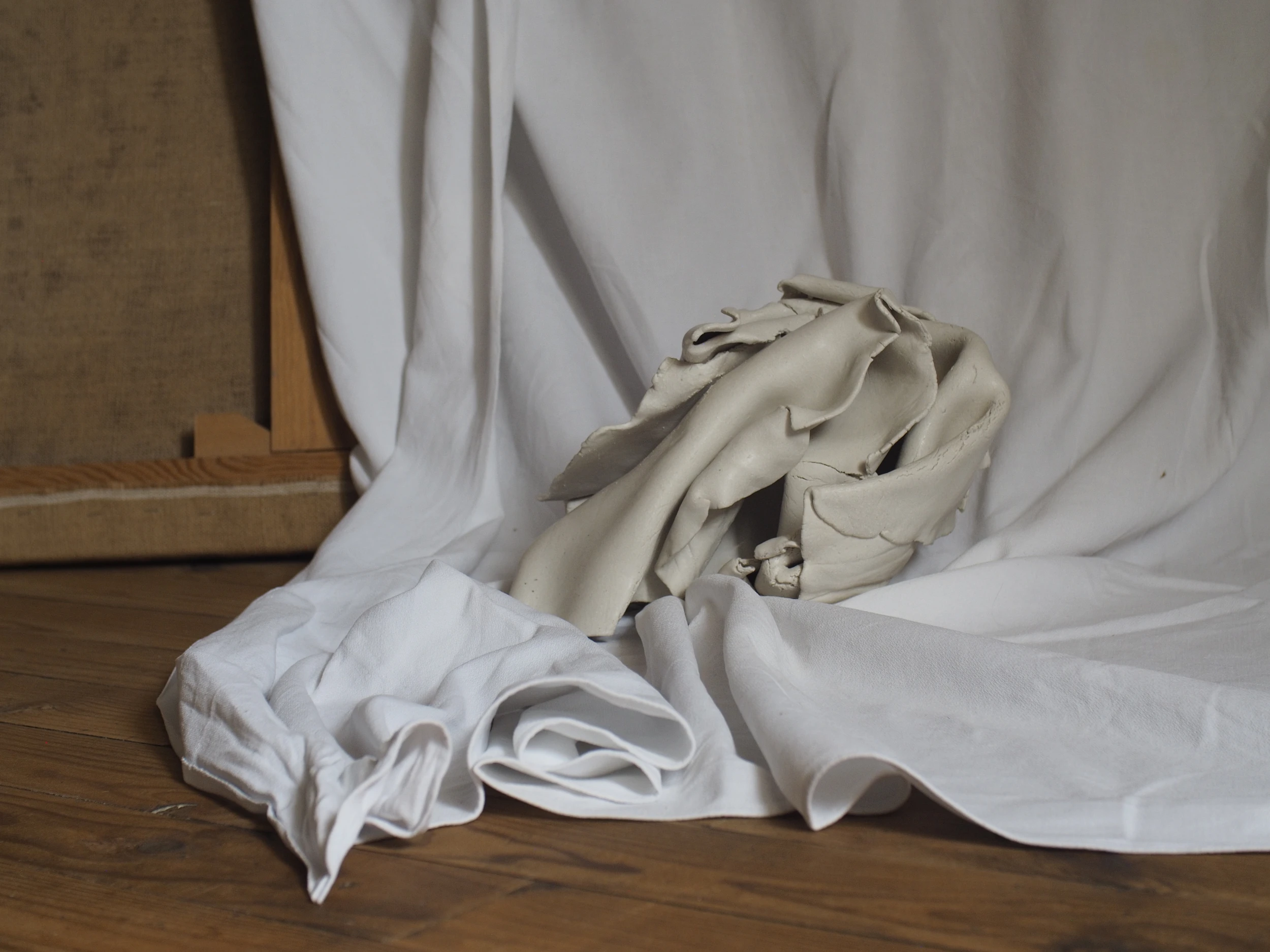
Johanna Meyer is a Brazilian ceramist based in the southwest of France. She came to ceramics the way she describes her own process: by following something that already knew where it was going. That instinct runs through her practice. She wraps clay in textile, lets gravity build the form, then slowly unveils what emerged.
Repose: How would you describe what you do?
Johanna: I wouldn't describe what I do as what I do, but as what I am. I truly believe I incarnate a practice that represents me in my most essential and intimate aspects. A living being in constant transformation.
I am a transmitter. I don't build the piece. I prepare the clay, I give it my energy, I guide it toward a transformation it already wants to undergo. There is something between me and the material, like when two people form something completely new that belongs to neither of them alone.
Repose: What led you here?
Johanna: I think it all started when I was about seven or eight. As a child I always played with rocks and was obsessed by textures. I am a hypersensitive person and I always had this feeling about hands: the sacred quality of touch, the gift of the senses, the ways of transmission.
From there I followed an academic path, studying journalism in São Paulo. I have always been very reflective by nature, thinking while existing. It is a trait I love, but it can be overwhelming, especially with a rhizomic type of mind. But I found myself writing what advertisers wanted me to say. I could not do that. I wanted to tell true stories. So I left.
Then I moved into jewelry design. I loved minerals, rocks, the symbolic weight of materials. But the jewelry world in Brazil had a specific limit: the value was in the material itself, not in the concept or the process.
Then I came to Biarritz for a trip and was stunned by the rocks, by the layers in the cliffs. For the first time I felt at home somewhere outside Brazil. I applied to art school there even though I did not speak French. I wrote them a letter and they accepted me.
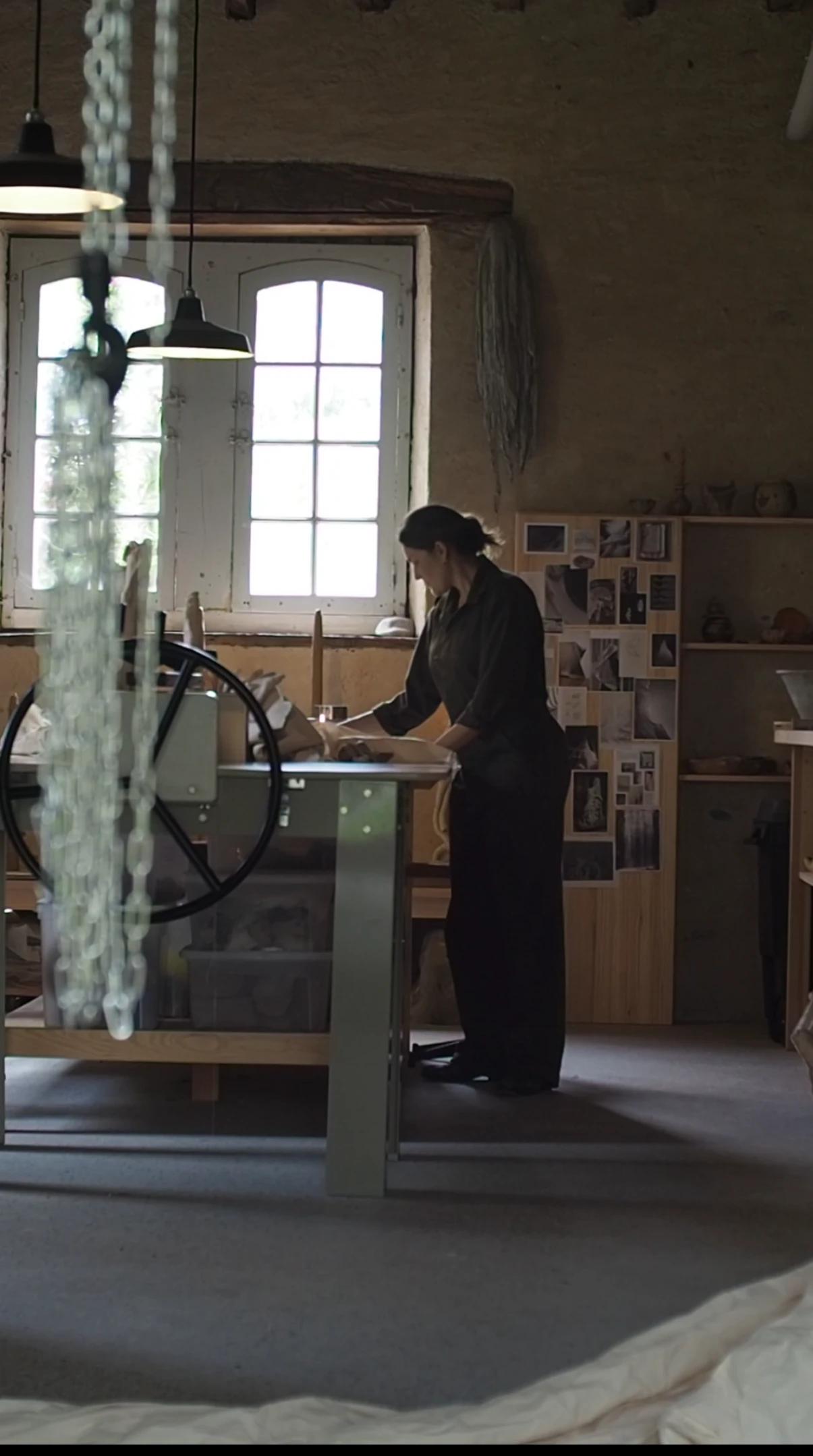
Working with clay is intensely physical. The first time I experienced this medium I felt like reconnecting with something very essential to me, something familiar, something I had received and that was waiting to manifest consciously. Since then, having the whole body involved in my practice became a point of balance.
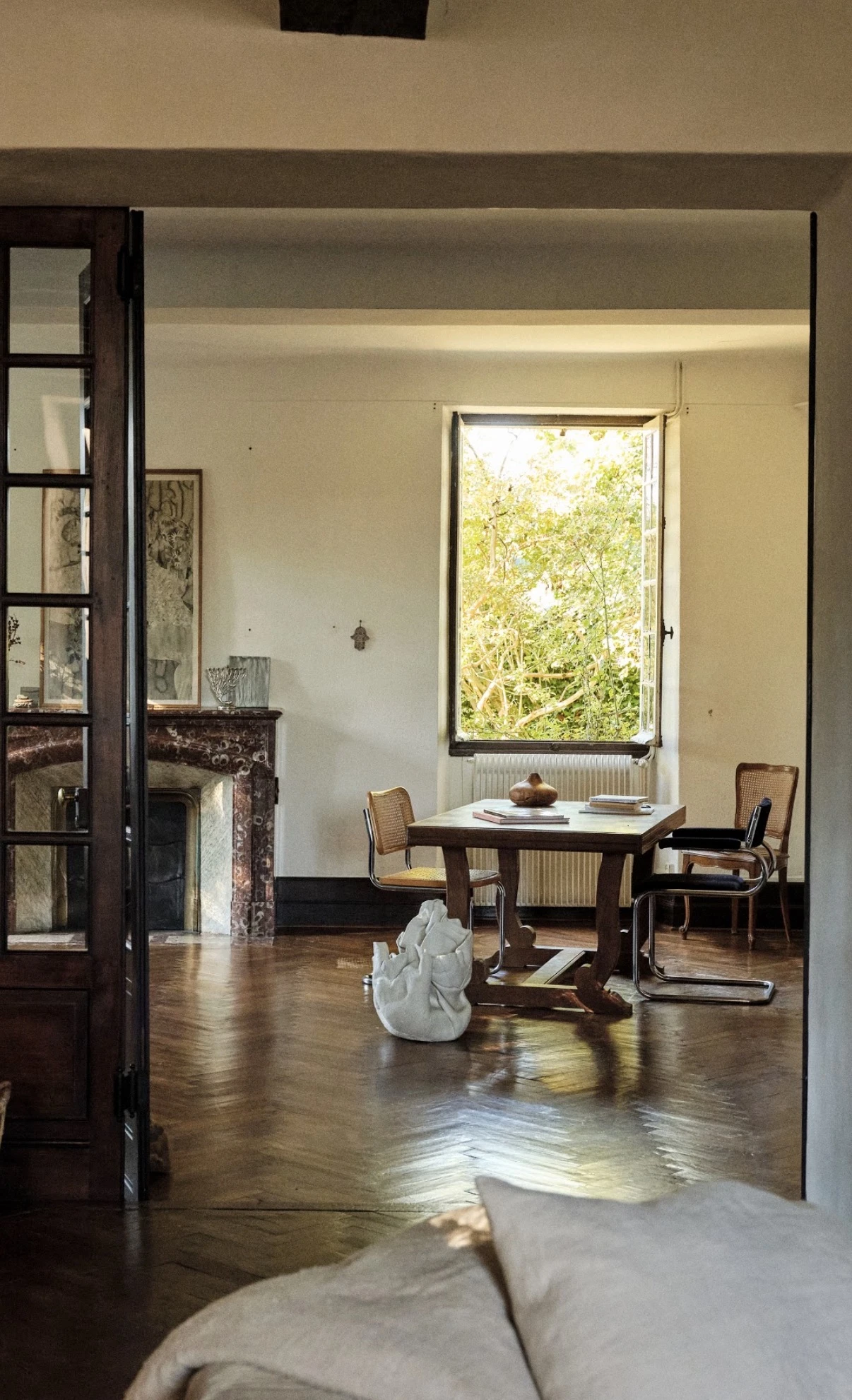
Photography: Mari Luz Vidal
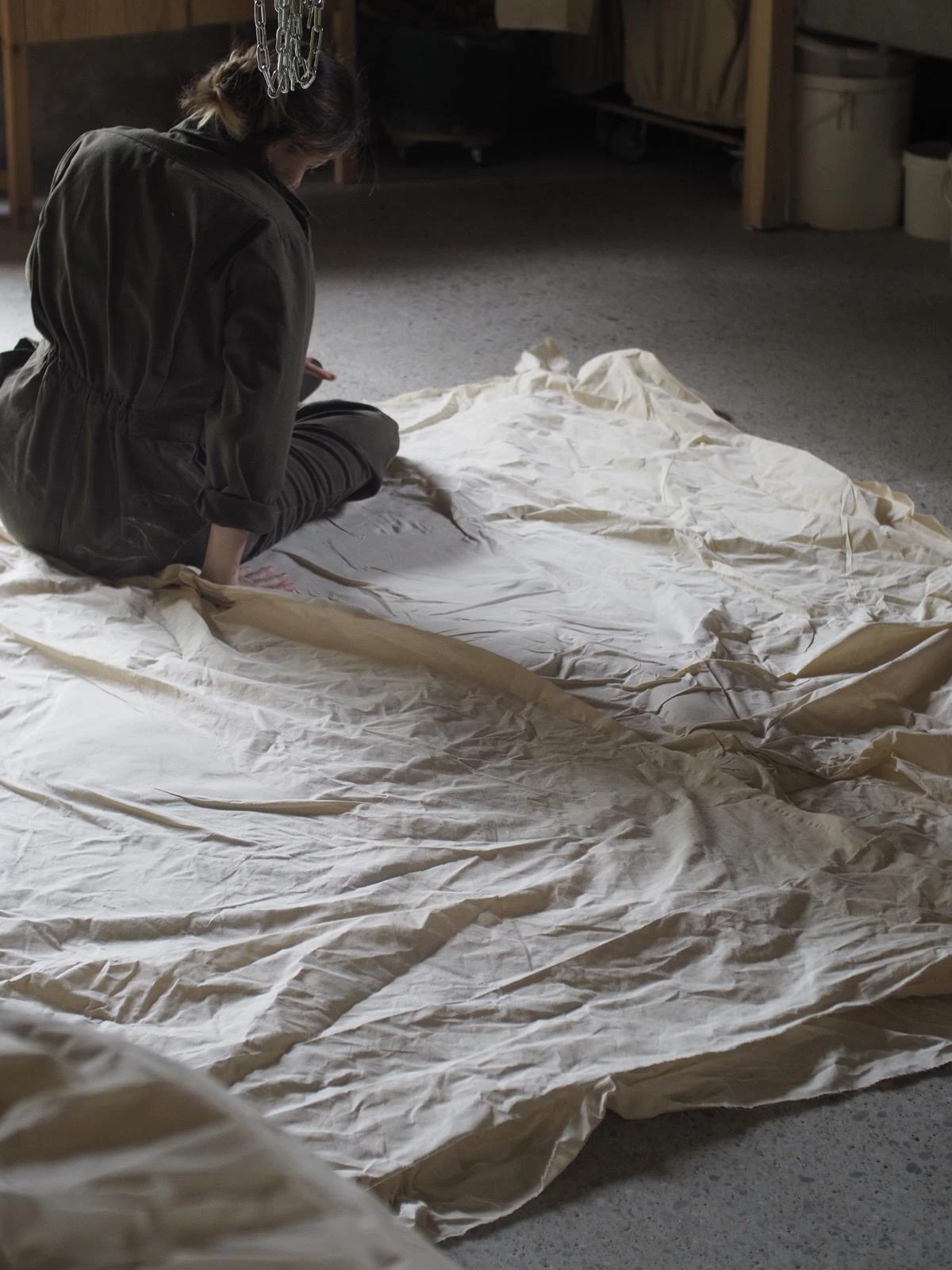
Photography: Casa Satiō
Repose: How do your ideas come to you?
Johanna: From a very internal and intuitive place. It is always a long story, a path, a message. Emotional, passionate, intense. The outcome is always something between material and immaterial, a space of connection, an intersection between me and the elements I transform.
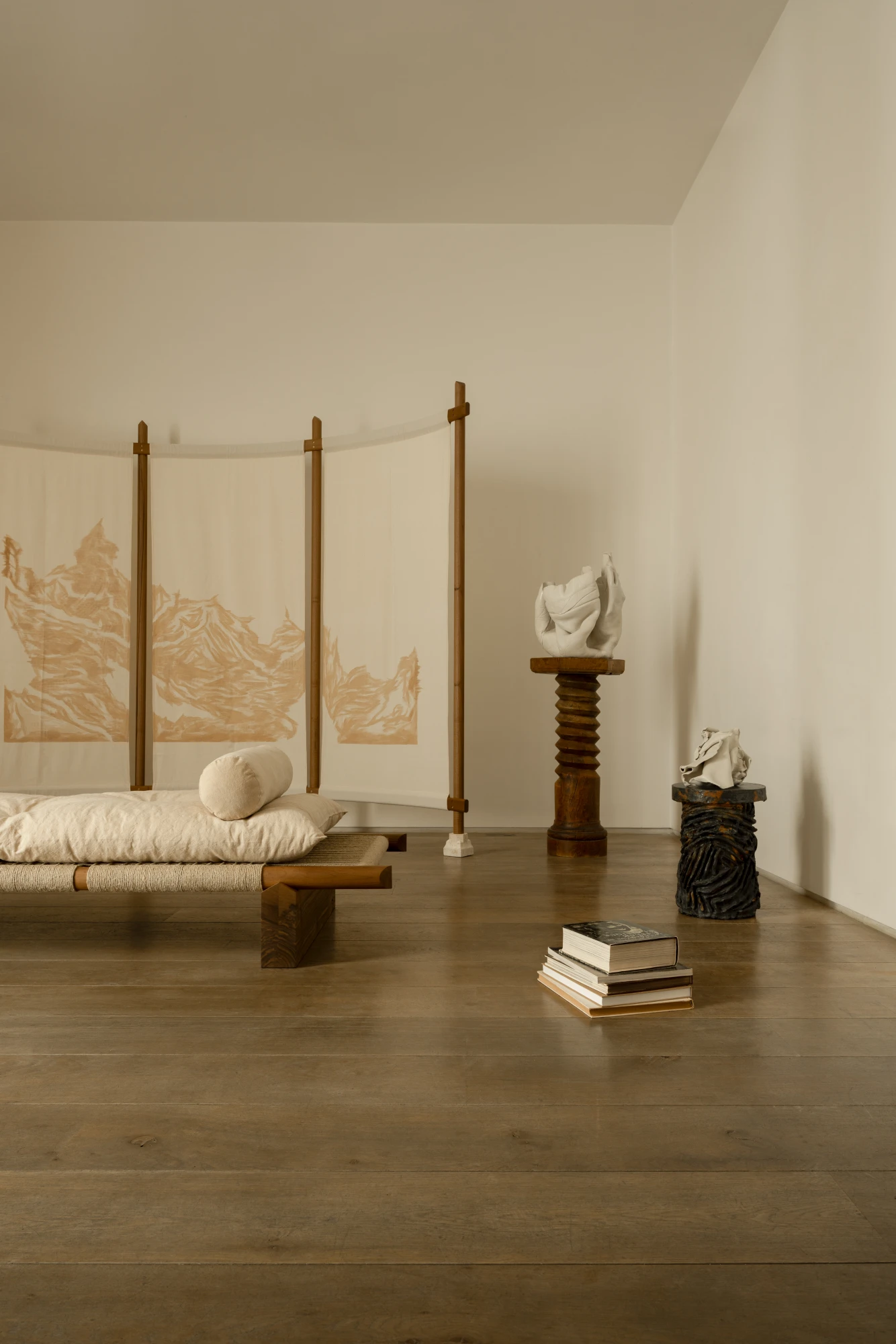
Photography: Studio Brinth for La Lune Galerie
Photography: Casa Satiō
Repose: What drew you to porcelain specifically?
Johanna: Porcelain is considered immaculate, precious. For me, it represents essence: what something truly is, not what it projects, not what it appears to be. The work is about revealing essence. The material carries that meaning.
Repose: Can you walk us through your process?
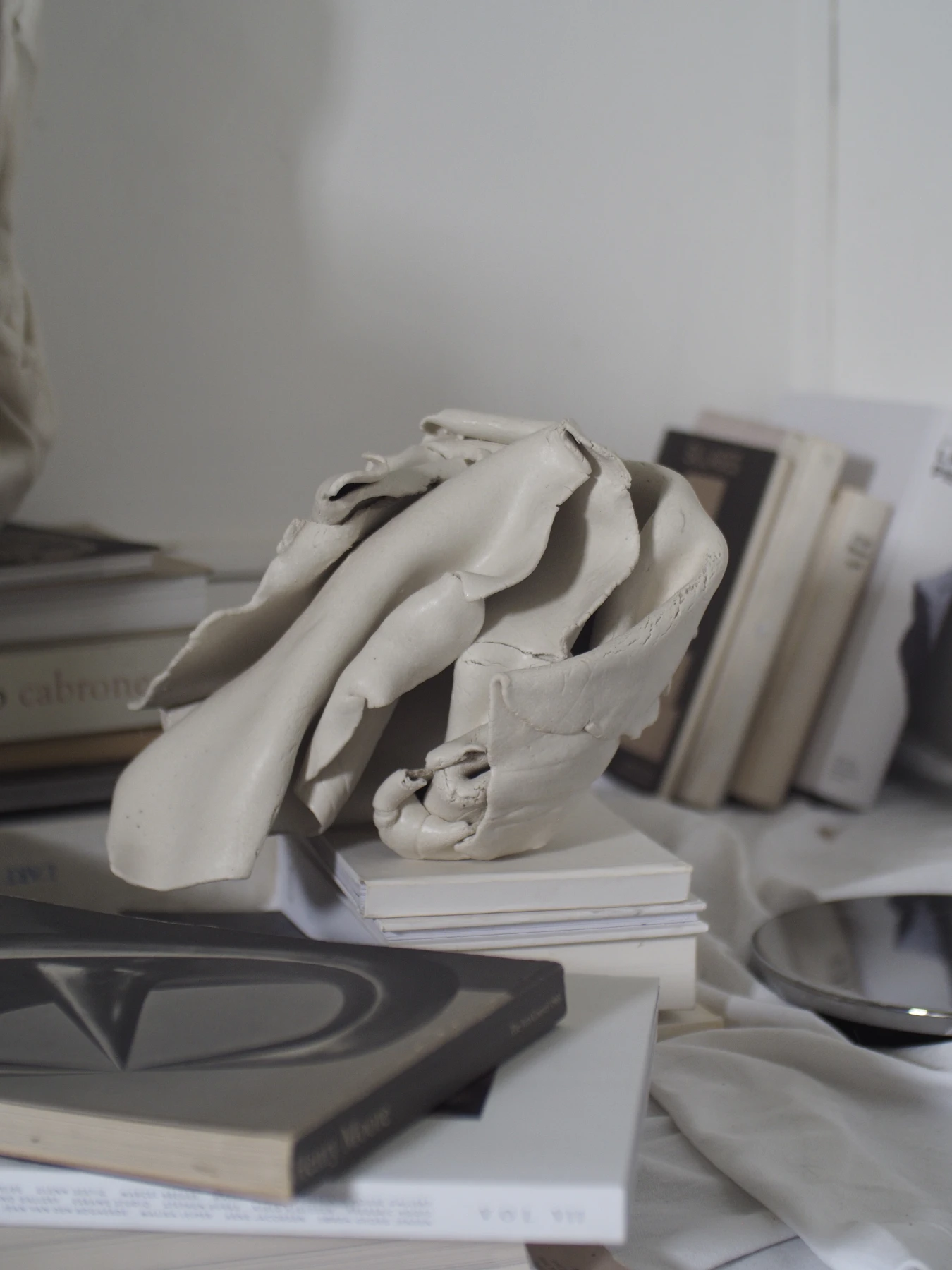
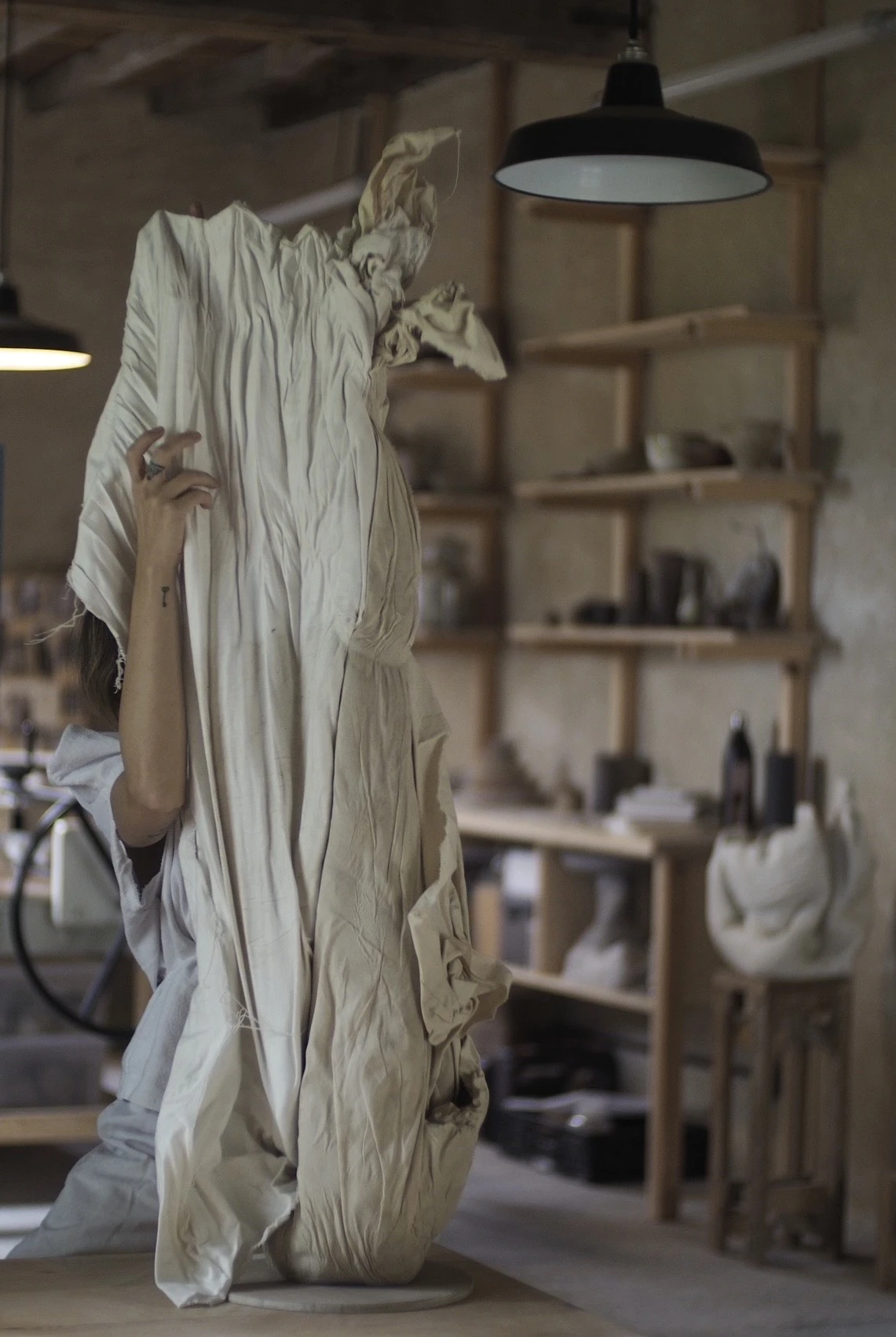
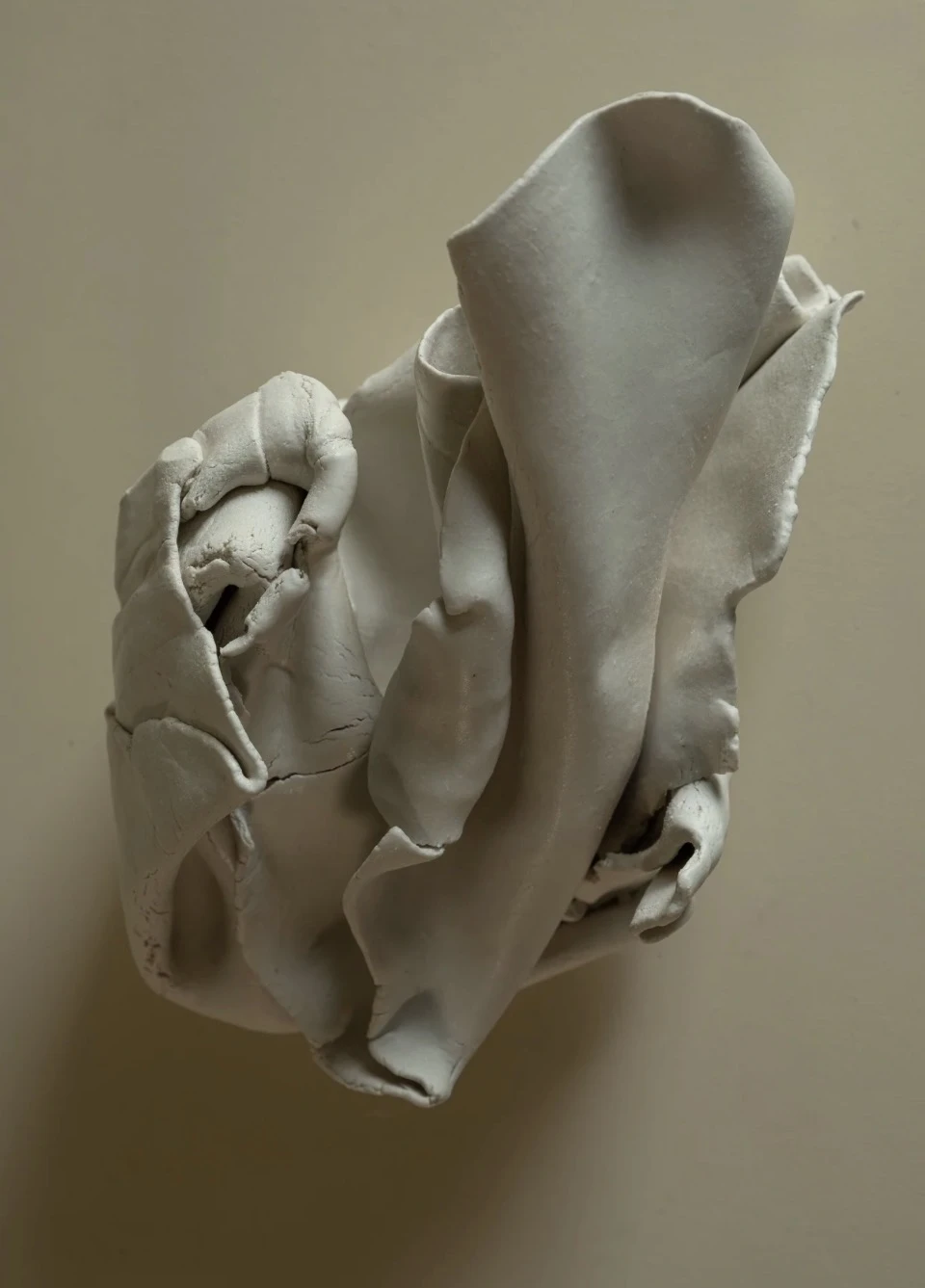
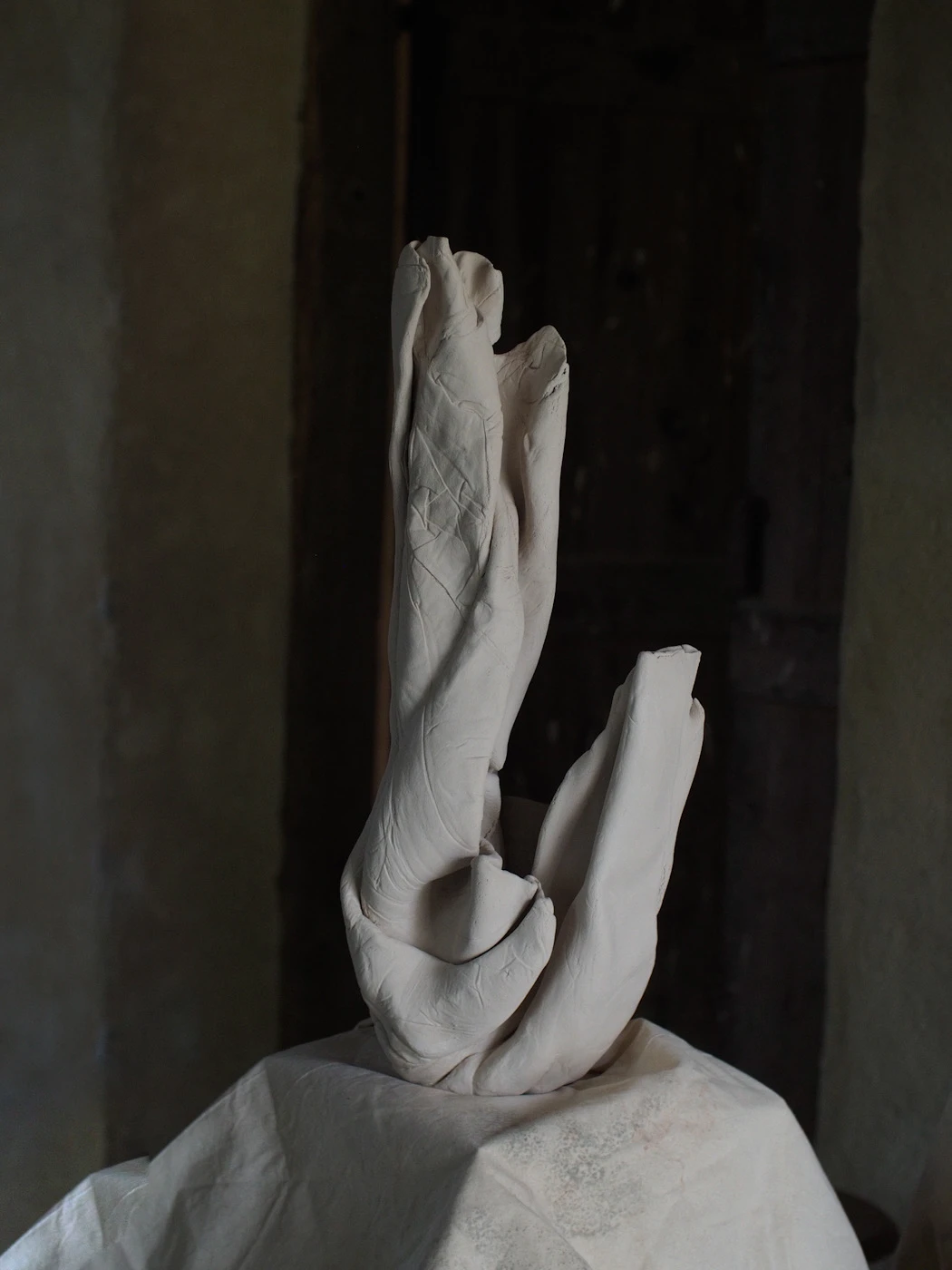
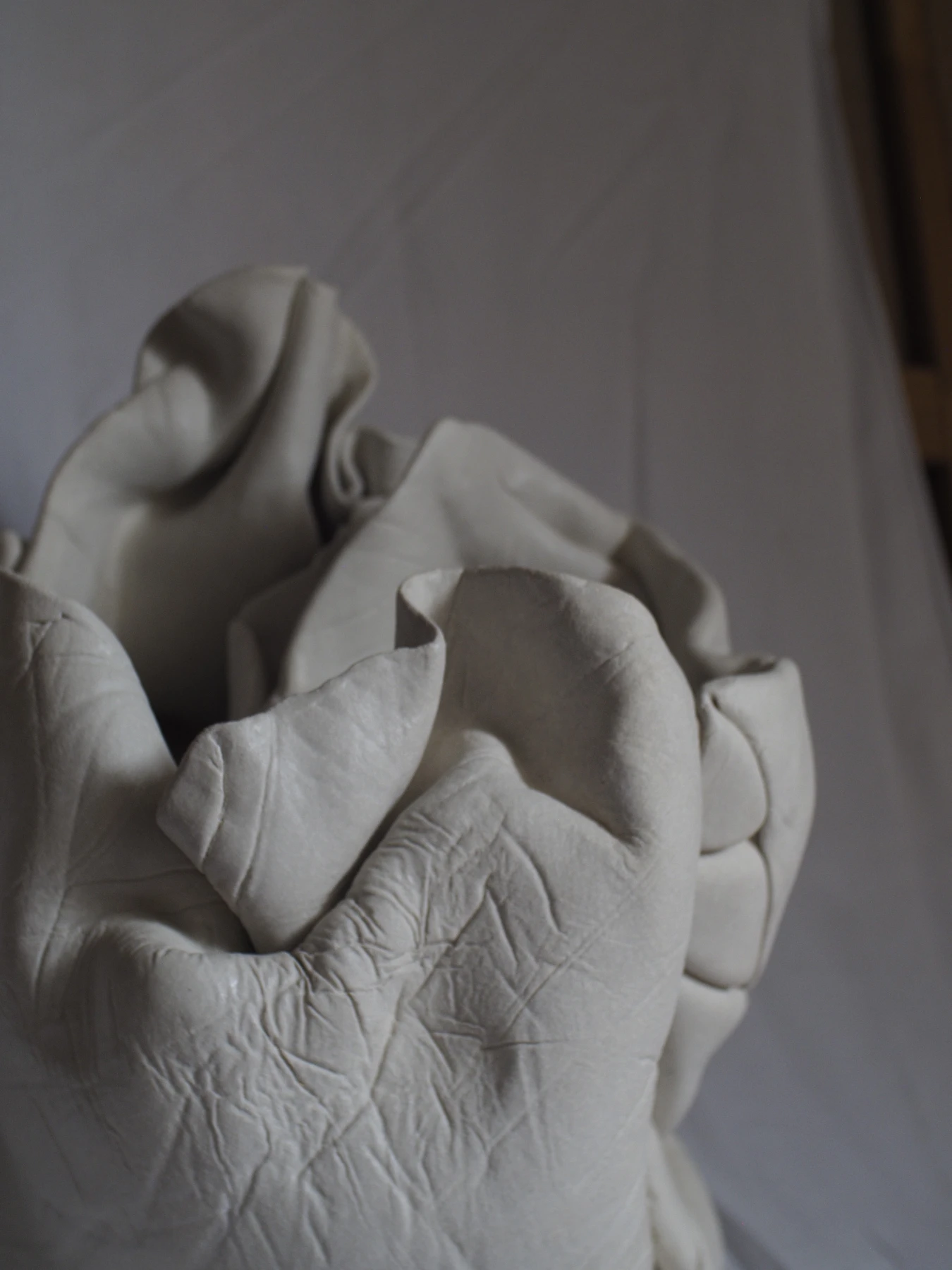
Johanna: I prepare the clay by hand. I touch it, I give it my energy. Then I wrap it in textile and I let gravity take over. The textile leaves its imprint on the surface. The piece forms inside this wrapping, protected while it generates its own shape.
When I remove the textile, layer by layer, that is the most powerful moment. You see what emerged. Like a cocoon. Something was happening inside and now it is out.
It is a symbiosis. My approach is a communion between the material, myself, and something new that belongs to neither of us alone.
Photography: Casa Satiō
Photography: La Lune Galerie
Photography: Casa Satiō
Repose: You believe materials themselves are alive?
Johanna: Everything is alive. If you think about particles, everything is formed by atoms, electrons. We are all matter in constant movement. Clay has its own molecules, structured in its own way. The clay wants to become something. I accompany that.
Photography: Casa Satiō
Repose: Has the essence of your practice evolved over time?
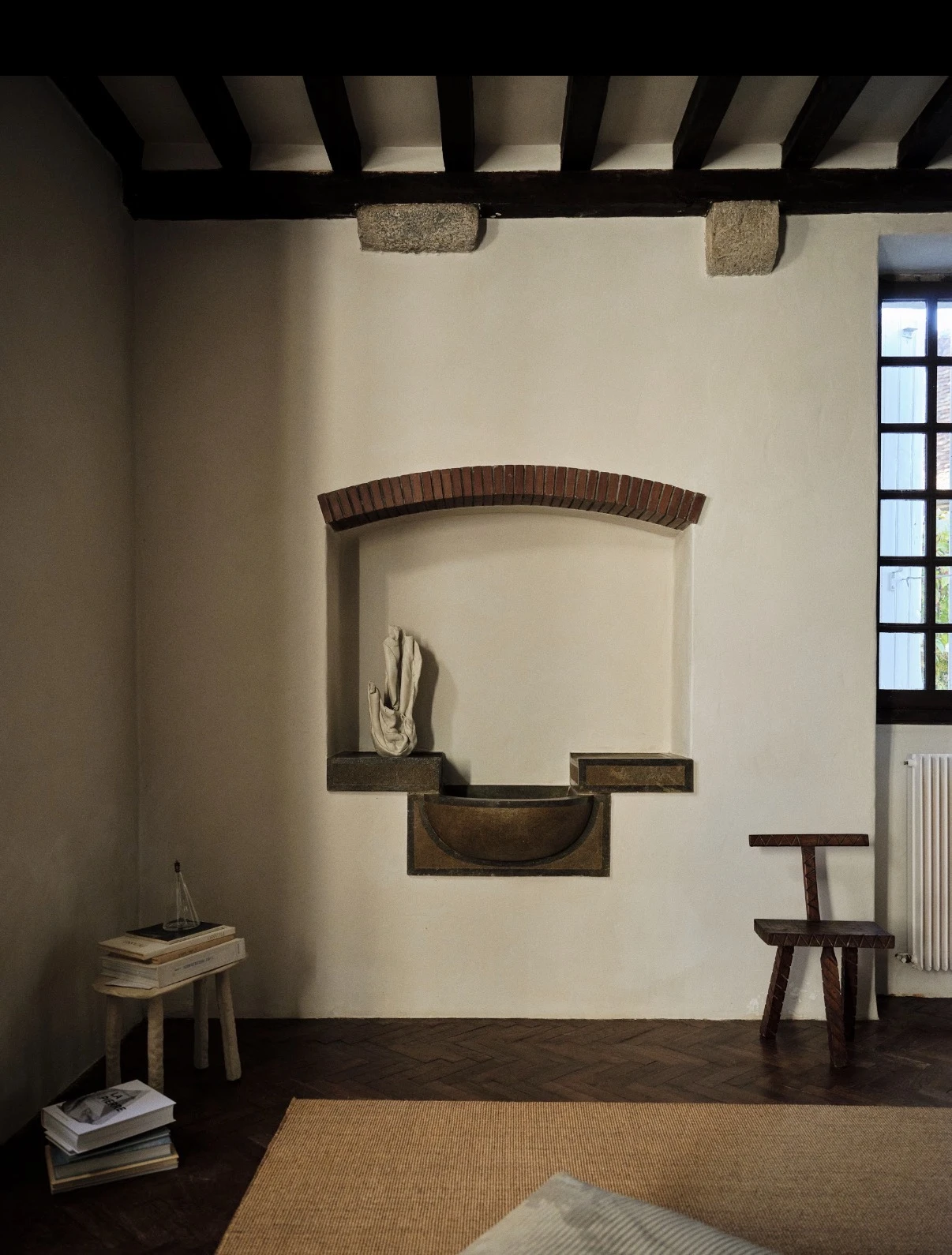
Johanna: For me the essence is sacred. Something that, even facing changes and evolving, stays pure in its core. It is always there. Immanent.
Photography: Mari Luz Vidal
Photography: Casa Satiō
Repose: Do you explain the stories behind your pieces to people who see them?
Johanna: Not always. The piece is an entity by itself. If I tell someone what it means to me, they will experience it through my eyes, and what they see might have been colored by my version. I think that is a loss.
Repose: That connects to something you mentioned about words.
Johanna: Words are powerful. They materialize things. When you say something, it leaves your body, it becomes vibration, it enters another person. I came from journalism because I love language, and I arrived at a practice where I sometimes choose silence for the same reason.
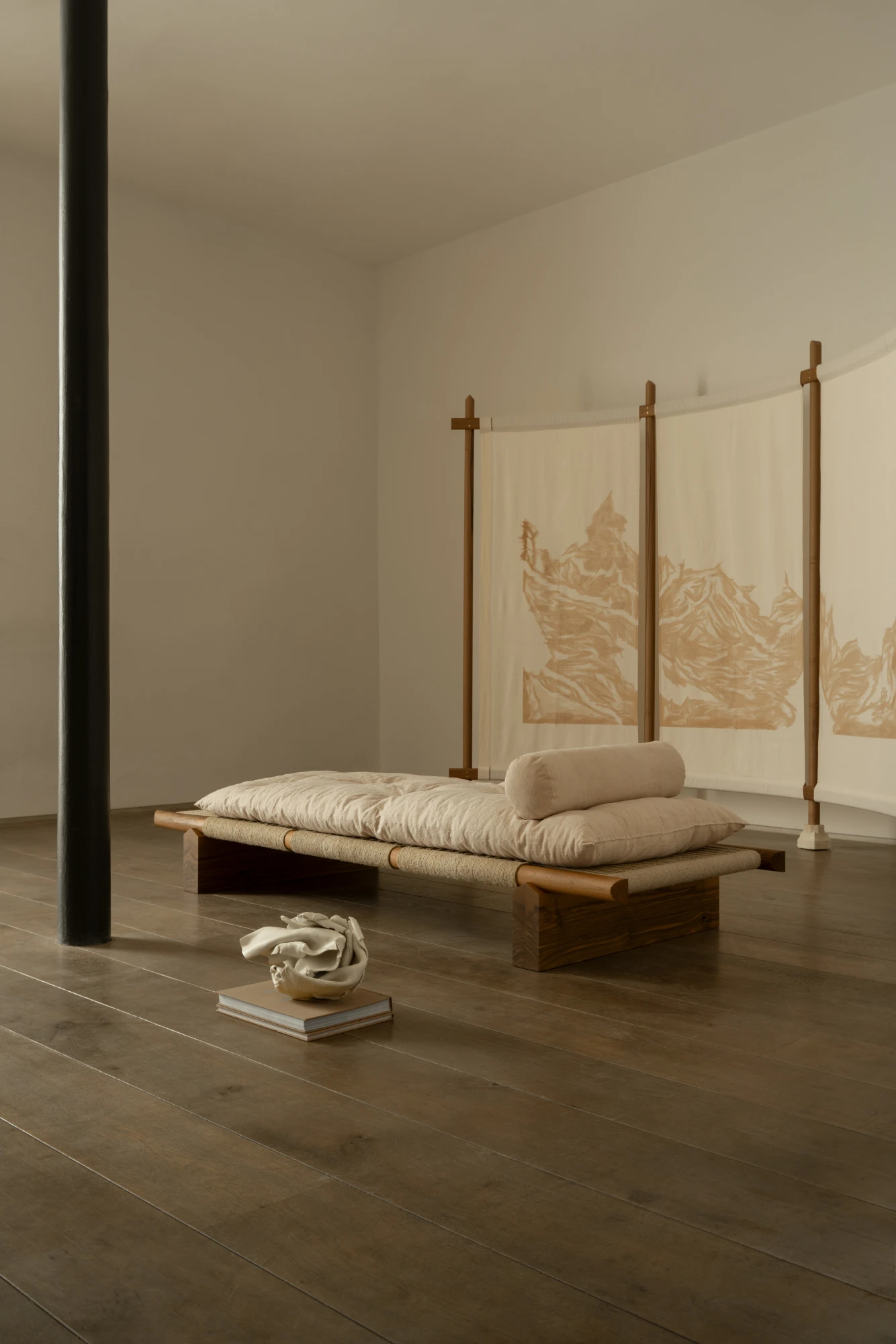
We undervalue the power of words. You can say something that changes someone's day, their sense of themselves. And the same is true of objects.
Photography: Studio Brinth for La Lune Galerie
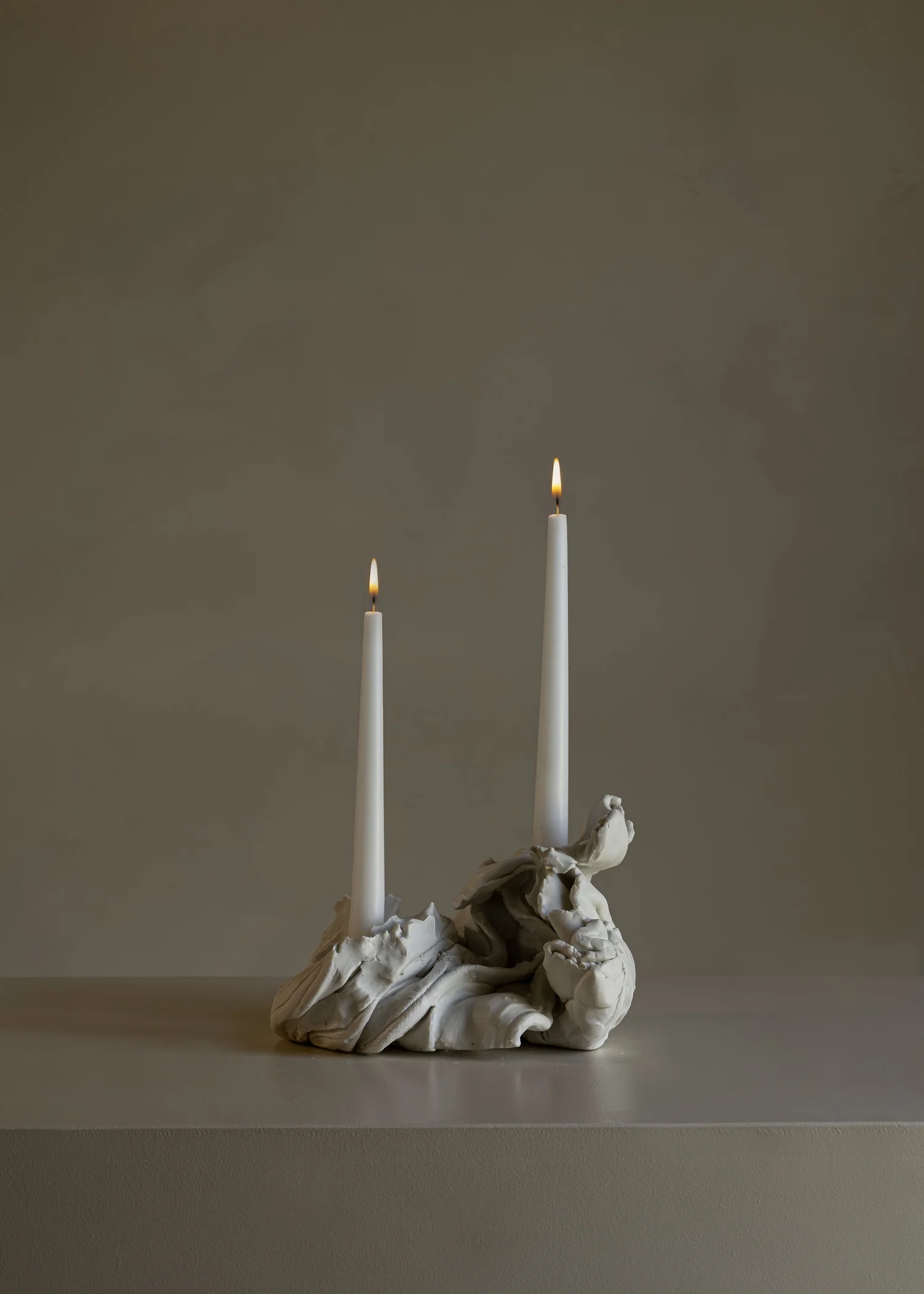
Photography: La Lune Galerie
Repose: What would you tell the person you were when you started?
Johanna: I see you.
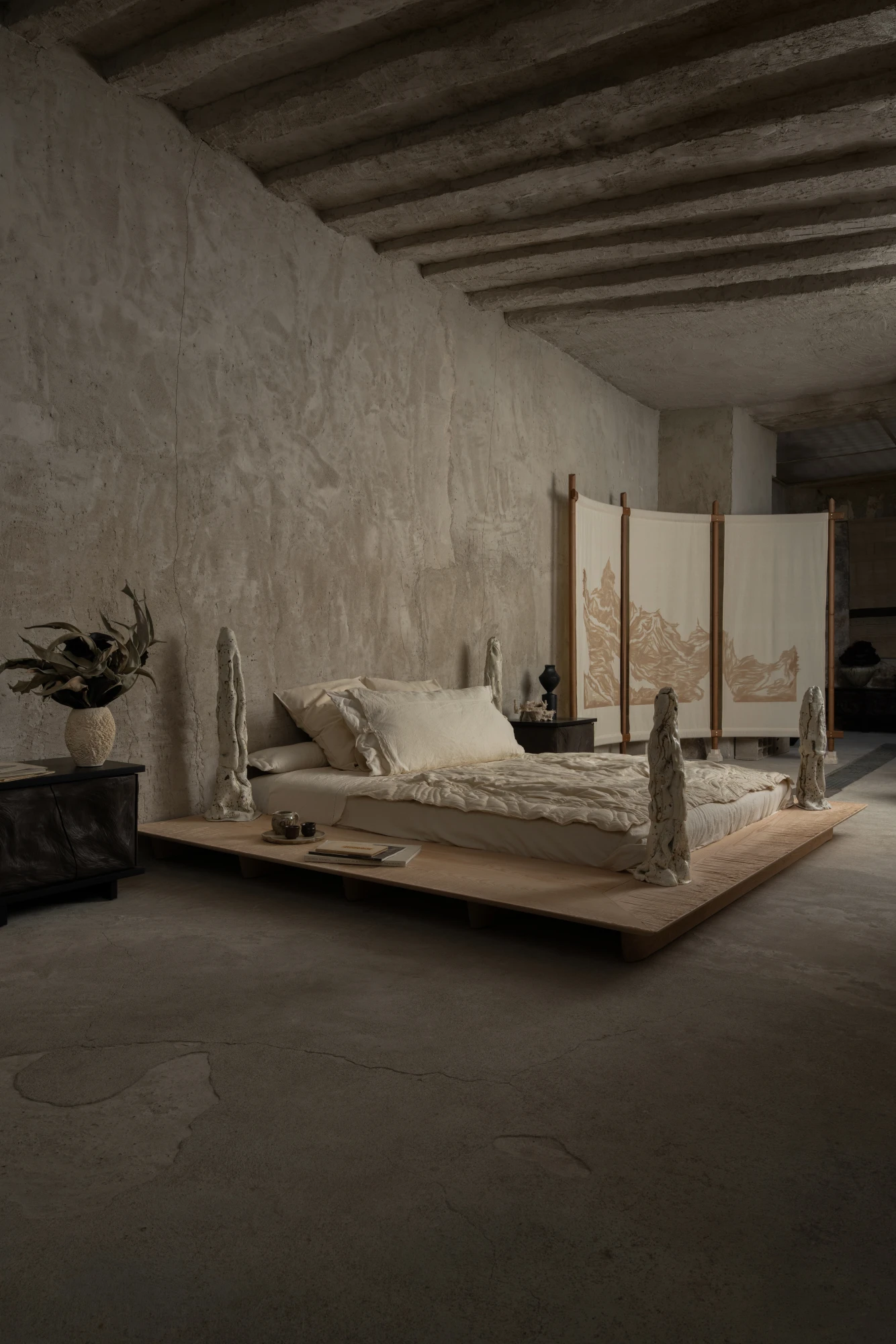
Photography: Studio Brinth for La Lune Galerie
Repose: What excites you about where your practice is going?
Johanna: I have arrived at a point in my career where I can bind all my different worlds, exploring the full diversity of my capacities. For me that is a huge accomplishment: to consciously be one with the multitude of aspects I carry, embodying the diversity that inhabits me, my story, my roots. For this I needed to let go of external judgements, abandon projections and expectations. To move from what is supposed to be, to reveal what it is. Truly.
Repose: What inspires you most?
Johanna: Maybe not specific philosophies, but philosophy in general. I love research; it is an obsession that follows me through all parts of my life. Most of my inspirations come from books, which connects to my other great passion: words. As symbols, as language, as history, as tools and ways of communication.
Bergson is one of my favourite philosophers. At the moment I am also obsessed by Étienne Klein: "Transports physiques" and "Regards sur la matière." And Gilles Deleuze: "Folds" and "Pure Immanence."
My mind is in constant movement: from the marks of a textile to the flapping wing of a bird, from notions of time and space to the symbiotic relations of nature. It keeps multiplying resonances, absorbing and connecting everything in a magic order, like a choreography, a moving constellation.
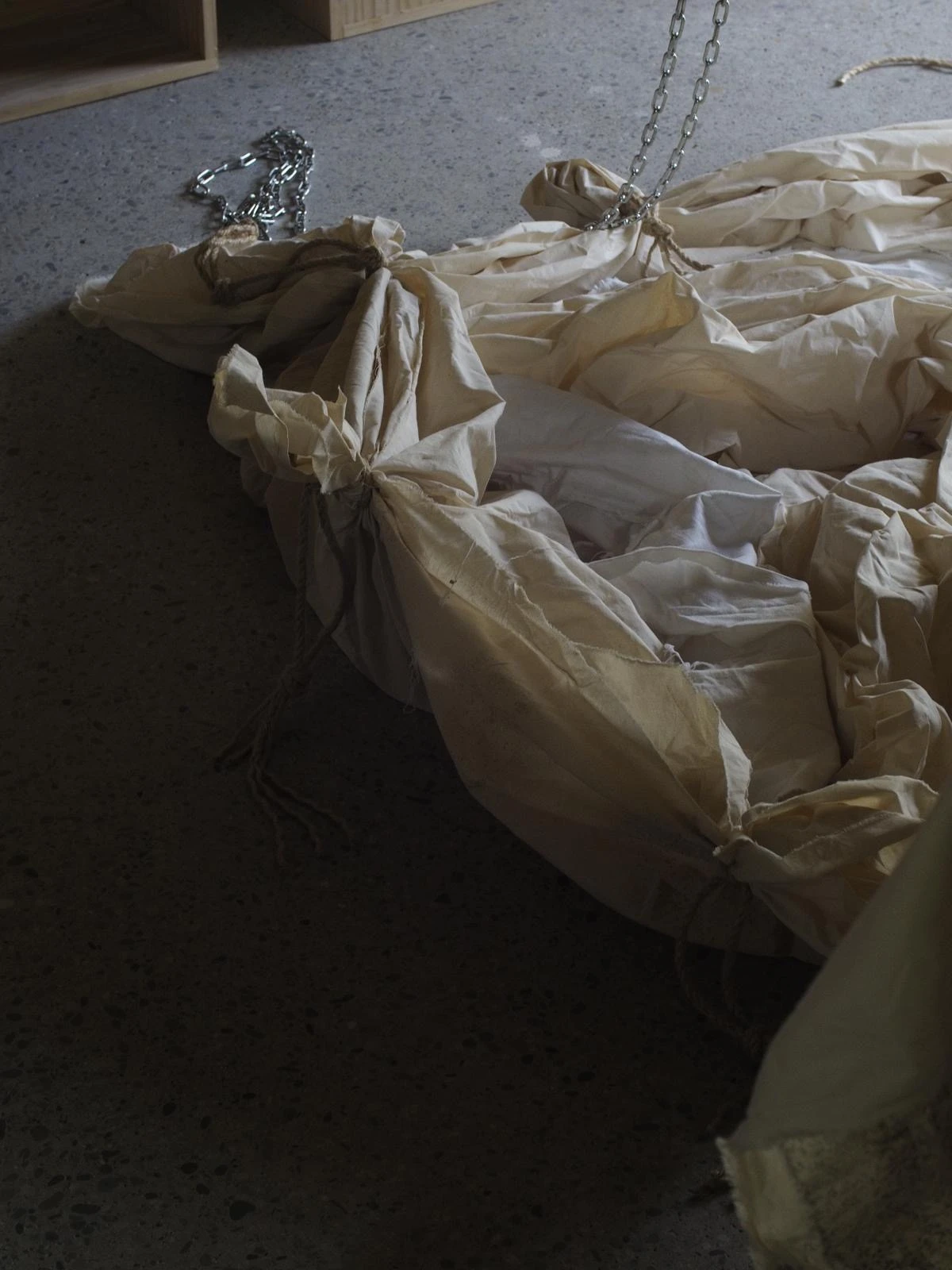
Photography: Casa Satiō
Photography: Mari Luz Vidal, Casa Satiō, La Lune Galerie, Studio Brinth for La Lune Galerie.
Know more about Johanna Meyer
Repose Archive is a creative direction journal documenting processes and projects across art, design, architecture, and hospitality.